
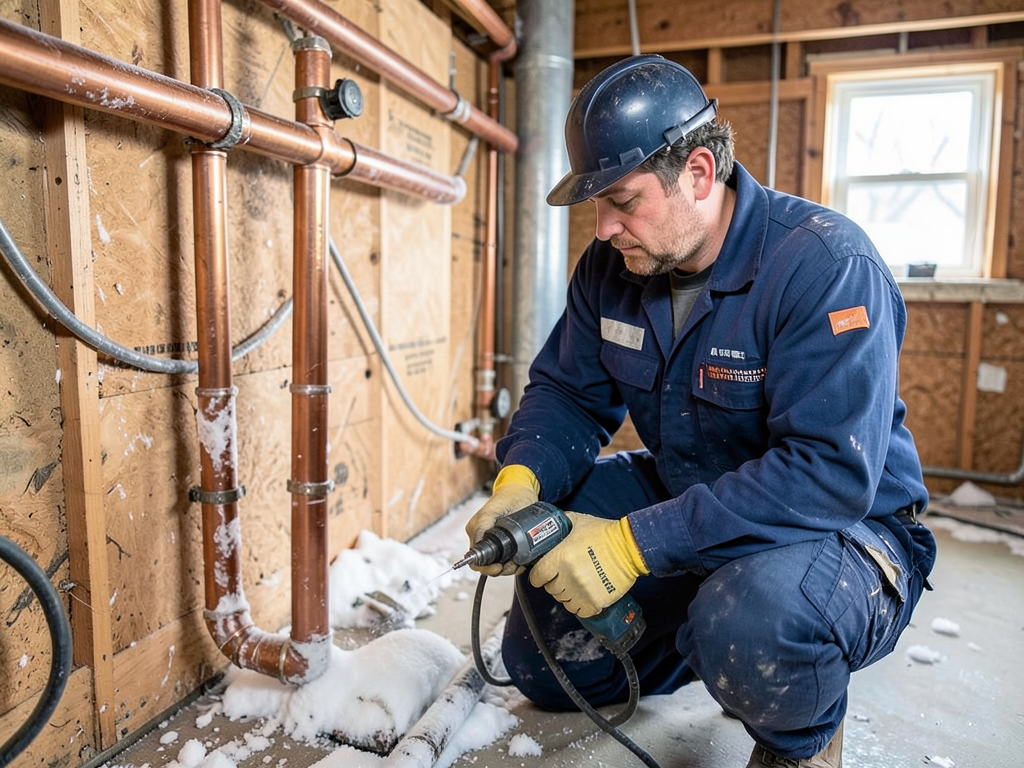
How to Fix Frozen Pipes Before They Burst This Winter in Buffalo
Buffalo winters are brutal and your home’s plumbing faces extreme risk when temperatures drop below 20°F. Frozen pipes can burst within hours causing thousands of dollars in water damage. This guide shows you how to spot frozen pipes early, thaw them safely, and prevent disasters before they happen. Get Your Hot Water Back Fast with Williamsville Water Heater Replacement.
Why Buffalo Pipes Freeze Faster Than Other Cities
Buffalo’s unique geography creates perfect conditions for frozen pipes. Lake Erie moderates fall temperatures but then drops dramatically in winter. The city sits in USDA Plant Hardiness Zone 6a where January lows average 17°F. When Arctic air masses sweep across the lake they pick up moisture creating heavy lake-effect snow and sub-zero wind chills.. Read more about What to Do If a Pipe Bursts in Your Buffalo Home Right Now.
Older Buffalo homes built before 1960 often have galvanized steel pipes that conduct cold faster than modern PEX or copper. Many historic districts in Allentown and Elmwood Village have uninsulated pipes running through exterior walls or crawl spaces. These pipes freeze first when temperatures drop below 20°F for more than six hours.. Read more about Why Every Buffalo Home Needs a Sump Pump Battery Backup Before the Thaw.
Buffalo’s building code requires exterior water supply pipes to be buried at least 4 feet deep to prevent freezing. However many homes built before the 1980s have pipes installed at shallower depths. The New York State Uniform Fire Prevention and Building Code Section 312.9 mandates minimum frost protection depths but does not require retrofitting older homes.. Read more about Replacing Your Main Water Line in Kenmore Without Ruining Your Yard.
Early Warning Signs Your Pipes Are Freezing
You have about 2-4 hours from when a pipe starts freezing to when it bursts. Watch for these warning signs: Burst Pipe Repair.
- Reduced water flow from faucets when other fixtures work normally
- Strange noises like banging or whistling when turning water on
- Visible frost on exposed pipes in basements or crawl spaces
- Bulging sections on pipes where ice is forming inside
- Unusually cold spots on walls where pipes run
Check your water meter. If the small triangle or dial is spinning when no water is being used you have a hidden leak from a burst pipe.. Read more about Finding and Fixing Hidden Water Leaks in Your Hamburg Home.
Emergency Steps to Take When You Find Frozen Pipes
- Shut Off Main Water Valve
Locate your main shut-off valve immediately. This prevents flooding if pipes burst while thawing. The valve is usually near your water meter in the basement or crawl space. Is Your Cheektowaga Basement Flooding? Here is the Sump Pump Repair You Need.
- Open Faucets
Open the faucet supplied by the frozen pipe. This relieves pressure and provides an exit for water when the ice melts.
- Apply Gentle Heat
Use a hair dryer, heating pad, or portable space heater. Start from the faucet end and work toward the coldest section. Never use open flame or propane torches.
- Check for Leaks
Once water flows again inspect all visible pipes for cracks or bulges. Even small cracks can leak hundreds of gallons per day.
Never use boiling water or direct flame on frozen pipes. The rapid temperature change can crack pipes or cause steam explosions. Electric pipe thawing machines used by professionals apply controlled heat without damaging pipes.. Read more about Professional Sewer Line Repair for North Buffalo Homeowners.
Professional Frozen Pipe Services in Buffalo
When DIY methods fail or you discover burst pipes call professionals immediately. Patriot Plumbing Buffalo provides 24/7 emergency frozen pipe services throughout Erie County. Plumbing West Seneca.
Professional thawing uses commercial-grade electric pipe thawing machines that generate 600+ watts of controlled heat. These devices clamp onto pipes and use electrical resistance to generate heat without open flames. Technicians can thaw a 50-foot section of frozen copper pipe in 15-20 minutes.
Professional leak detection uses acoustic listening devices and thermal imaging cameras to find hidden bursts behind walls. Small leaks behind drywall often go unnoticed until mold develops or ceilings collapse.
Preventing Frozen Pipes Before Winter Hits
Prevention costs far less than emergency repairs. Follow these steps before Buffalo’s first freeze: EPA WaterSense Fix a Leak Week.
- Insulate Exposed Pipes
Install foam pipe insulation on all exposed pipes in unheated areas. Use R-4 insulation minimum for Buffalo’s climate. Pay special attention to pipes in crawl spaces, attics, and exterior walls.
- Seal Air Leaks
Caulk gaps around pipe penetrations where pipes enter your home. Cold air drafts can freeze pipes even in insulated walls.
- Install Heat Tape
Apply UL-listed heat tape to vulnerable pipes. Modern heat tape has built-in thermostats that activate only when temperatures drop below 40°F.
- Drain Outdoor Faucets
Disconnect garden hoses and drain outdoor spigots. Install frost-proof sill cocks that shut off water inside your home’s heated space.
Set your thermostat to at least 55°F even when away. Opening cabinet doors under sinks allows warm air to circulate around pipes.
Cost Comparison: Prevention vs Emergency Repair
| Service | Average Cost | Time Required | DIY Difficulty |
|---|---|---|---|
| Foam Pipe Insulation | $0.50 – $2.00 per linear foot | 2-4 hours for typical home | Easy |
| Heat Tape Installation | $3 – $5 per linear foot | 3-6 hours | Moderate |
| Professional Thawing | $200 – $500 per service call | 1-2 hours | Professional Only |
| Burst Pipe Repair | $500 – $2,000+ | 4-8 hours | Professional Only |
| Water Damage Restoration | $2,000 – $10,000+ | 3-14 days | Professional Only |
Insurance Coverage for Frozen Pipe Damage
Most homeowners insurance policies cover sudden water damage from burst pipes but exclude damage from poor maintenance. Review your policy before winter.
Standard policies typically cover:
- Structural repairs to walls, floors, and ceilings
- Personal property damage from water
- Emergency plumbing services
- Water removal and drying services
Coverage exclusions often include:
- Damage from pipes that froze due to home being vacant
- Losses from gradual leaks over time
- Damage from poor insulation or maintenance
Document all damage with photos before cleanup. Keep receipts for emergency repairs. Your insurance adjuster will need proof of the burst and resulting damage.
Common Mistakes That Lead to Burst Pipes
Avoid these costly errors that Buffalo homeowners make every winter:
- Turning Off Heat During Cold Snaps
Many try saving money by lowering thermostats during cold spells. This creates perfect freezing conditions in vulnerable areas.
- Ignoring Small Leaks
Even tiny leaks can freeze and expand, blocking entire pipe sections. What starts as a drip becomes a flood.
- Using Open Flame
Propane torches and heat guns cause more damage than they prevent. They can ignite nearby materials or crack pipes.
- Delaying Professional Help
Waiting until morning often means dealing with major flooding instead of a simple thaw.
Buffalo Neighborhoods Most at Risk
Certain Buffalo neighborhoods face higher frozen pipe risks due to age and construction:
- Historic Districts (Allentown, Elmwood Village) – Pre-1940 homes with uninsulated walls
- North Buffalo – Mixed housing stock with varying pipe materials
- South Buffalo – Many homes built in the 1950s with deteriorating galvanized pipes
- Black Rock – Older industrial buildings converted to residences
Houses near the Niagara River often experience more freeze-thaw cycles due to temperature moderation from the water. This constant expansion and contraction stresses pipes over time.
When to Call a Professional Immediately
Call Patriot Plumbing Buffalo at (716) 317-6655 right now if you experience: Plumbing Orchard Park.
- No water flow from multiple fixtures during freezing weather
- Visible water stains on ceilings or walls
- Bulging or cracked pipes
- Musty odors suggesting hidden water damage
- Complete loss of water pressure
We provide 24/7 emergency service throughout Buffalo, Amherst, Cheektowaga, and surrounding suburbs. Our technicians arrive within 60 minutes of your call during winter emergencies.
Frequently Asked Questions
How cold does it need to be for pipes to freeze?
Pipes begin freezing when temperatures drop below 20°F for more than six hours. Wind chill and lack of insulation can cause freezing at 32°F.
Can PEX pipes freeze without bursting?
Yes. PEX piping can expand up to 10% without breaking, unlike copper or galvanized steel. This makes PEX ideal for Buffalo’s climate.
How long does professional pipe thawing take?
Most residential frozen pipe situations take 1-2 hours to thaw and inspect. Emergency response times average under 60 minutes.
Will insurance cover my burst pipe repair?
Most policies cover sudden water damage from burst pipes but exclude damage from poor maintenance or vacant homes.
What temperature should I keep my house at in winter?
Never set your thermostat below 55°F, even when away. This prevents freezing in vulnerable areas.
How can I tell if my pipes are already frozen?
Symptoms include reduced water flow, strange noises, visible frost on pipes, and bulging sections where ice forms inside.
Take Action Before It’s Too Late
Buffalo’s next cold snap is coming. Don’t wait until you have a flooded basement or no water at all. Simple prevention steps today can save you thousands tomorrow.
Call Patriot Plumbing Buffalo at (716) 317-6655 for a winter plumbing inspection. Our experts will identify vulnerable pipes and recommend cost-effective solutions to protect your home.
Don’t let frozen pipes burst this winter. Pick up the phone and call (716) 317-6655 before the next storm hits. Your home deserves professional protection from Buffalo’s brutal winters.
Remember: When temperatures drop below 20°F and you suspect frozen pipes, immediate action prevents disasters. Patriot Plumbing Buffalo is your local expert for emergency frozen pipe repair and prevention throughout Western New York. For more information, visit International Plumbing Code.